
By Christine Aziz
I’m a word whore. For years I sold to the highest bidder. My main trade was stories, words told them. At 16 I became a trainee-journalist on a local paper and whacked out news stories on a typewriter to meet a stream of deadlines. Sometimes you had less than an hour to track down the story, grab an interview, and write it for the next edition. I sat in hundreds of living rooms drinking hundreds of cups of tea, visited police stations, fire stations, local groups, schools, listened to stories of events that had often profoundly affected the life of the interviewee. I quickly learnt that everyone had a story to tell, and that stories were everywhere, in courtrooms, hiding behind council minutes and committee meetings. A news story is never more than 500 words and before dot.com the story had to be written in the head before bashing it out on the typewriter – there was no cut and paste – and you couldn’t make mistakes as it meant tearing out the sheets and starting all over again. Journalists have an admirable capacity for haste.
I was already a single mother when I started work as a freelance journalist for magazines and news, and was often reporting on harrowing stories mainly concerning women, and sometimes from conflict areas. Getting the story out from countries like Afghanistan before digital journalism, was often difficult. Typewriters were hard to come by and Faxes (remember those?) often didn’t work. I had to find a working phone, and read the story out from my notebook to the copytaker. Adrenalin and jangled nerves fed the stories and deadlines. It began to take its toll. At night when the children were in bed I wrote my own stories, fictional, fantastical, transporting me away from the stories filling my notebooks. I started several novels. I stuffed them in drawers, unfinished. I wrote poems, bits of plays, short stories. Finding words for fiction felt healing, but writing habits forged in the newsroom got in the way.
Journalists learn the ‘inverted triangle’ method of structuring a story. The opening lead sentence should be enough to speak for the whole story. Paragraphs are built this way too, so that skimmers who read only the first sentences gain an immediate sense of the story. The least important facts come last as they are likely to be chopped to make room for a bigger story. In fiction, information delivery is replaced with invitation to story. Sentences serve to pull us deeper into the thoughts and actions of characters, taking the reader to whatever conclusion or emotional place the author desires. The aim is to get the reader to feast on each line. I was used to readers who nibbled.
In journalism, objectivity is the buzz word. I reported from a psychological and emotional distance like a doctor with a scalpel. But fiction gets at inner truths and I hovered like a frightened insect over my fictional stories as if they were Venus Fly Traps. Journalism taught me to find a story, fiction taught me to invent it. I had to understand that fiction readers want to follow the protagonists decidedly subjective take on an unfolding story. It was a relief to give free rein to my imagination and play with perspective driven narratives. As a journalist I always reported what people did, in fiction I had to explore why, and I had to get to know my characters more than I knew myself. I learnt too, that readers seek to be co-creators of a story, and that they want authors to get their hands dirty.
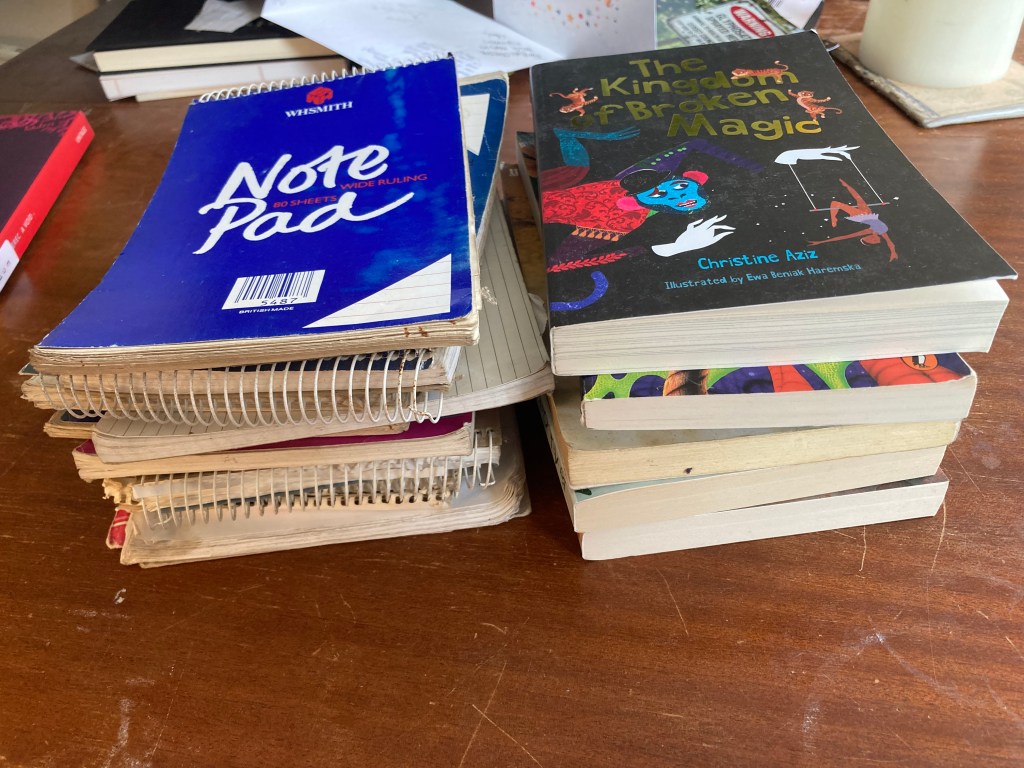
Old reporter notebooks have been swapped for fictional books
Writing fiction involved a big perceptual shift. I was trained to stick to the facts and was stubbornly resistant to tweaking a place, timeline or event to improve the story. My early attempts at fiction were full of exposition, particularly in the first chapter. I wanted the reader to ‘get’ the story, and surely they could only do that if it started with a huge info dump. In the process I limited creativity and emotional depth. I wanted to tell not show . I still struggle with this.
Journalists are thick skinned – we are used to having our copy butchered, or even killed. So the edits to my first novel were not heartbreaking. No one can be precious about any writing that strives for readership: in both industries, editors are ruthless. We are also trained observers and listeners which are core skills for writers of any genre. I developed these skills as a young trainee, and quickly learnt to follow my gut feeling, especially when it came to identifying bulls***ing interviewees. Now it’s transferred to my fiction – intuition often tells me if my writing is doing the same.
Being a deadline junkie can be a curse. It means that when you don’t have one, as is often the case in fiction, you have to set your own (unless your whipping out a four book deal to a series of six monthly deadlines!). Most writers set their own, but mine quickly become horizons in the distance. It’s one of the main problems for journalists turned fiction writers.
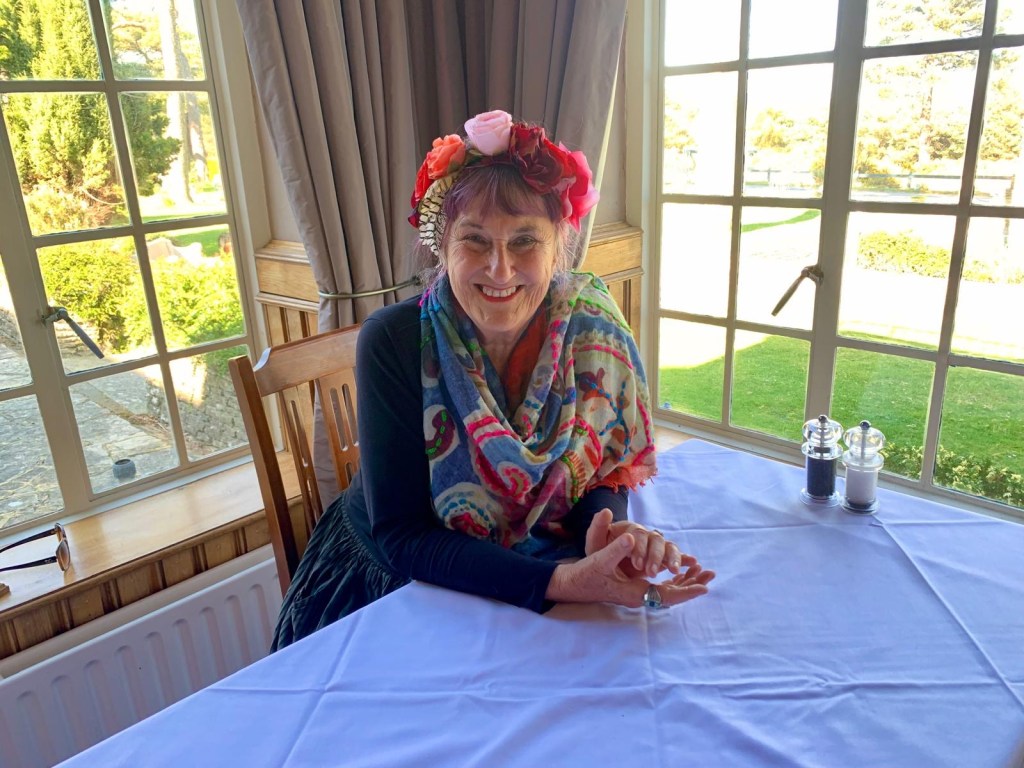
At Knoll House, where Enid Blyton wrote
Many journalists have made a successful cross over to fiction. Charles Dickens, Tom Wolfe, Martha Grimes, and Ernest Hemingway have all shown how journalistic observation can fuel wildly successful fiction. Argentinian journalist, Mariana Enriquez, writes haunting, politically charged fiction informed by her journalism on social equality and violence. A former colleague at The Independent, Helen Fielding, wrote witty, self-deprecating pieces for the paper that captured the voice of modern women. Her authentic take on dating and work caught the eye of a publisher and Bridget Jones was born.
Since then, truth-telling in journalism has been largely side-swiped. But that integrity remains in fiction where writing with purpose and emotional honesty still counts for something. It’s why I’m thankful for the cross over.
You can find out more about Christine and her books through her Author Events page here: https://authorevents.co.uk/2025/10/04/aziz-christine/
 Author Events
Leave a comment