
by Patrick Larsimont
What inspired you to centre your debut around a young Scottish pilot during WW2?
I grew up in Scotland. Jeremy ‘Jox’ McNabb’s background is pretty much mine. I went to the same school, Dollar Academy, and left in the same circumstances as described in my first book i.e. got kicked out for going to the pub. Perhaps typical of an author’s conceit what goes on in Jox’s head is what is often in mine, but appearance-wise he is based on a close friend, also called Jeremy but known as Jocky.
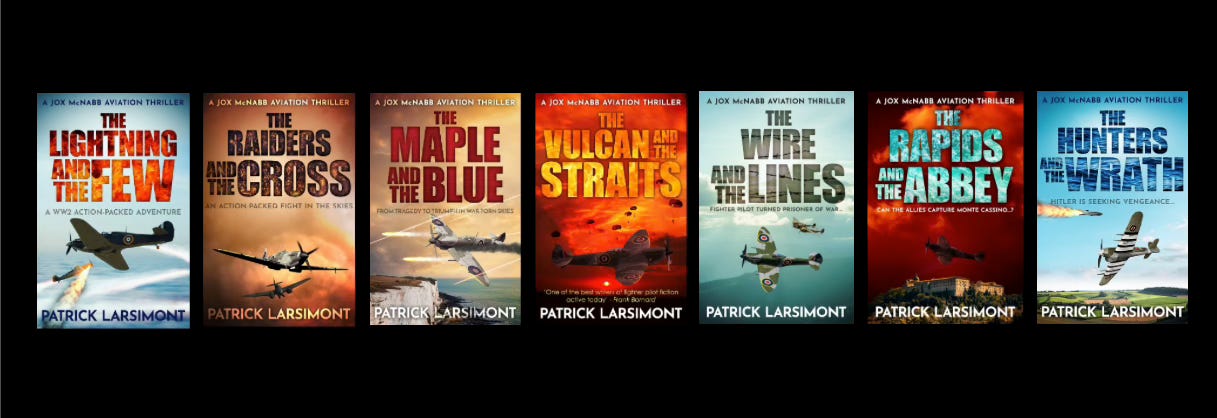
I’ve always been interested in military history, served in the air force in the Eighties and then years later when the opportunity came along to enter a writing competition for Sapere Books to write a WW2 Aviation thriller series, the stars aligned, I entered and won. The seventh in the series THE HUNTERS AND THE WRATH will be published on the 22nd May 2026.
How did your military background influence the Jox McNabb series?
My grandfather was a soldier, as was my father, then so was I. My grandfather saw the worst of it, becoming a prisoner of war and was sent to Stalag 17B in Krems, Austria during WW2. We were all soldiers of our time, mine as a Cold War warrior, serving as an Intelligence officer in a NATO Airforce. Here, I learnt the difference between the ‘official’ account of things and the ‘reality’ on the ground, what goes unreported and the SNAFUs that are a big part of military life. Equally, the tragedies and tales of valour, not always known and acknowledged, which I try to weave into my stories. The way soldiers speak and behave with each other is important to get right, not least because when writing in this genre, there are no shortage of what I call ‘rivet counters’ who like to tell you when you’ve got something wrong. I always welcome their input.
Each book in the series tackles a different theatre of war—how do you approach the research to capture historical accuracy?
Research is never a chore, I’m into this stuff anyway. I have an extensive library and collect ‘factoids’ for future campaigns which Jox will be involved in. I sometimes have to fiddle with timelines for him to be present and involved in important events, but I always cover that off in my Historical Note, acknowledging some creative license has been taken for the sake of the stories.
Jox experiences physical and emotional trauma throughout the series—how important is it to you to reflect the psychological cost of war on young servicemen?
Very important. Fiction fills the gaps which straight retelling of history leaves behind. My characters need to have agency, react well or badly to things, suffer, mourn, be afraid, rage against something, fall apart and have any number of reactions to harrowing circumstances. War is about loss and how your characters react is your story.
From the outset, Jox was going to have a very long war, and we know he survives, but loses many close to him along the way. Some are killed, others injured, some with wounds more obvious than others. I am sometimes accused of having too large a cast, but in my experience, military life is about short intense bursts of knowing each other, then rotating away. In war, this must surely be even more the case as greater numbers are lost. What is now known as PTSD raises its head in many forms in my Jox stories but is front and centre in my military paranormal story THE BROOKWOOD BOYS.
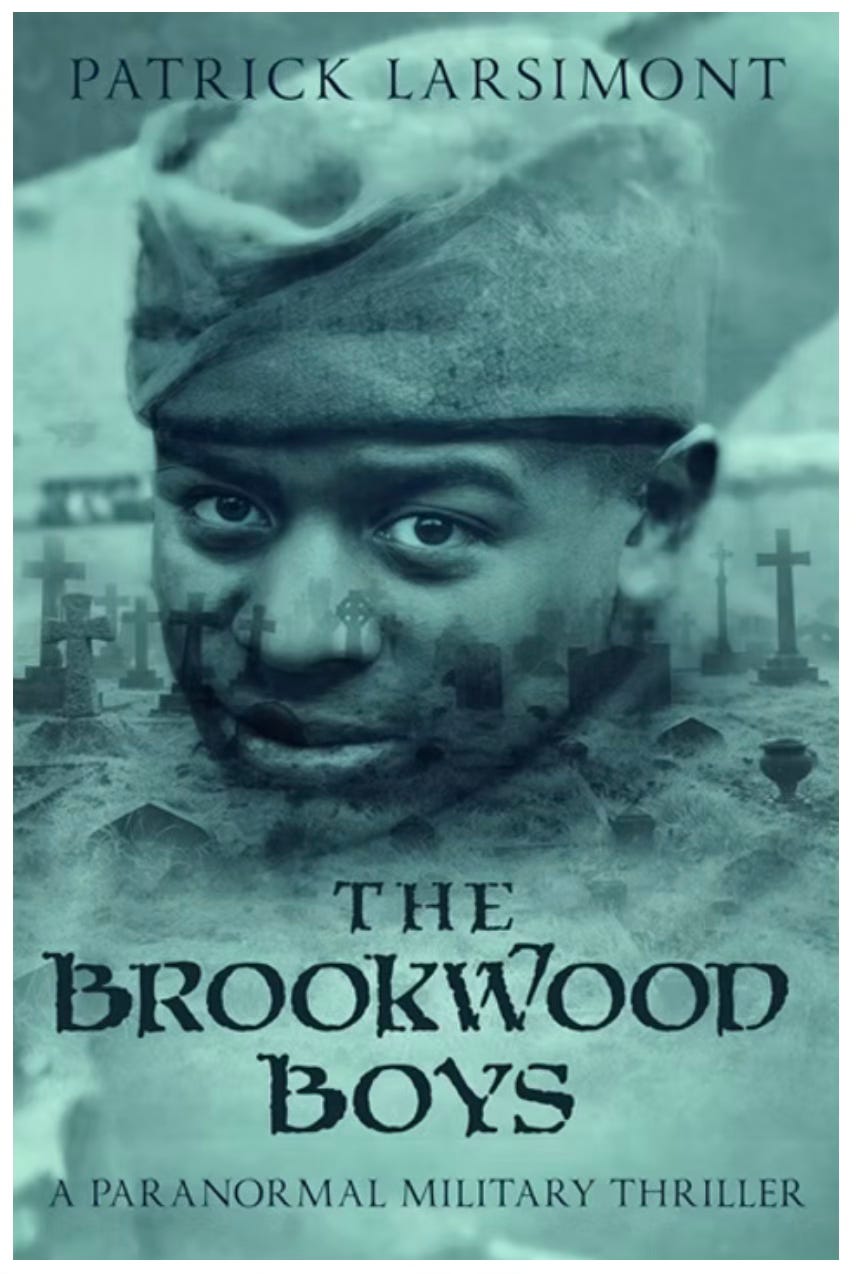
The Brookwood Boys marks a departure into the paranormal—what led you to explore this genre, and how did it differ from writing historical fiction?
TBB is the story of a WW1 soldier Mouse Forsyth who has haunted Brookwood military cemetery for a hundred years, greeting the mad, bad and sad over the years. One day he is seen by a living boy and has a secret he must reveal to the living.
This standalone novel was written before any of the Jox books, during the Covid-19 lockdown. One of the few places I could walk and keep away from people was Brookwood Cemetery in Surrey, England. It’s a fascinating place, originally designed to receive London’s dead in the late 1800s and is the largest cemetery in western Europe. Within it, is the largest military cemetery in the UK, the setting for my ghost story.
It occurred to me whilst walking between countless rows of graves, these were all stories waiting to be told, character after character lined up side by side. I took some real ones and made some up to find the genesis of my story.
With seven books in the Jox McNabb series and more to come, how do you keep the character’s journey fresh and compelling?
I’m not really sure, but it seems to be working. All that I do is dig deep into some unknown or forgotten aspect of a particular campaign, then throw those circumstances at Jox and his friends. The fact that many of them are based on my own boyhood friends, means I know how they’ll react. I’m afraid it’s a hazard of being one of my pals that you’ll probably get killed or horribly maimed in my books. I have two friends who have the dubious honour of dying twice already. They never seem to mind and it’s a surprisingly effective means of subliminal book marketing.
Are any of your characters or scenarios based on real individuals or events that you encountered during your military service or research?
Many of my fictional characters are based on friends, but rarely the ‘baddies’, except for one chap who rather liked the idea of being a nasty Nazi, so Oberst Kreg von Wella was born. Otherwise yes, Jox does meet many real individuals both lower-key ones but also some exalted, well known individuals. He goes through real battles, challenges and issues.
As for my own experiences, yes, I suppose they’re baked into the narrative too, but only in terms of the generalities of military service, like having to ‘hurry up and wait’ or situations routinely going SNAFU or FUBAR.
What advice would you offer to authors looking to write fiction inspired by military history or personal service experience?
Get the first draft done. You can’t edit a blank page. It doesn’t have to be any good to start with, just get it down. Refrain from constantly redrafting what you’ve just written.
I use what I call the ‘slingshot’ method: I know what needs to come next in the story but stop writing for the day before I do so. That way tomorrow, I know what to start with and can ‘slingshot’ myself into my next day’s word count (1,200).
Also, use the things that drove you forward in the military: self-discipline; self-belief; attention to detail; a thick skin and ambition. Just stop whinging, get on with and get it done.

What is the next book?
I’ve collaborated with six other Sapere authors on an anthology of short stories about Dunkirk called A MIRACLE OF DELIVERANCE. It will be published on the 17th of April. Check it out on https://getbook.at/MiracleDeliverance
Find out more about Patrick and his books here: https://www.patricklarsimont.com/
 Author Events
Leave a comment