
By Steve Couch
Even as a child I loved writing, yet I waited until I was approaching my 40s before finally starting to write fiction. Now writing has put me in the utterly unexpected position of masterminding a smash hit pop single. How did I get to this point?
I loved creative writing at primary school, and English was my favourite subject at secondary school. When our school launched a sixth form magazine, my contributions made up roughly half of the first issue – obviously an editor who couldn’t say no, something that I wasn’t to encounter again for many years. All this time I was a voracious reader, and yet I never started seriously writing fiction.
Why not? One reason was that I knew that the books I most enjoyed reading all had something to say about the world, and I didn’t know what I had to say yet. I wish someone had told me then to just tell stories, that the meaning reveals itself in the writing rather than being a starting point. Another reason for not getting started was that life was busy, and my work – first as a Youth Worker, then writing and editing online educational resources – gave me plenty of scope to express creativity.
So what changed in my late thirties? For a few years I had experienced a nagging suspicion that maybe I had missed my opportunity, maybe I was leaving it a bit late to do the thing I might be really good at. That sense of wasted potential, of always wondering what I might have achieved, became a constant presence. Not knowing what I might – or might not – have achieved, that sense of the path not taken, weighed heavily on me.
The catalyst was my children being at the age where I was reading to them at bedtime. I was inspired by some of the books we read together to have a go myself. I started writing children’s stories, and I set myself a target: I would commit to seriously writing and seeking publication for a period of five years. That was long enough for the learning curve to kick in and for me to see whether or not my ambitions were realistic. My wife and I joked at the time that this was probably the least destructive mid-life crisis in history: I wasn’t buying motor-bikes, or starting affairs with younger women; I was writing children’s stories. That felt like something we could both live with.
The five-year trial came and went. Picture books had given way to first chapter books, and then middle grade fiction. Although no agents or publishers took me on, I received enough encouragement along the way to believe that publication wasn’t an impossible dream. At the time I regarded this as a period of ‘failing better’, steadily making progress towards my goal.
More significantly, I rediscovered that childhood love of writing fiction for its own sake. I was still looking to see my work in print, but if that never came to pass – if it turned out that I wasn’t good enough – then there was still value in the work for its own sake. The writing was its own reward.
Eventually, during the lockdown of 2020, I started writing for adults. Having long maintained that I wanted to write for children, it was a shock to discover that I preferred the longer format. It gave the storytelling more room to breathe, more room to head in unexpected directions, and more opportunities to layer the story with clues, hints, red herrings and literary slight-of-hand. I was able to write the kind of books that I would have wanted to read myself.
The first of those grown-up books, House of Red Cards, felt like the best thing I had ever written. It was a tale of dirty tricks and intrigue amongst the adults populating the world of kids’ grassroots football – Roy of the Rovers meets House of Cards. I set out on the submission rounds with high hopes. High hopes which were, once again, universally dashed.
As before, I dusted myself off and got on with writing the next project. That was Dead Man Singing, the story of a has-been rock star who fakes his death to get his records selling, then goes on the road as his own tribute act. It tapped into another life-long enthusiasm of mine, rock music, and I loved piecing together the fictional world of my protagonist, Dave Masters, and weaving him into the tapestry of the real-life music pantheon of the 70s and 80s.
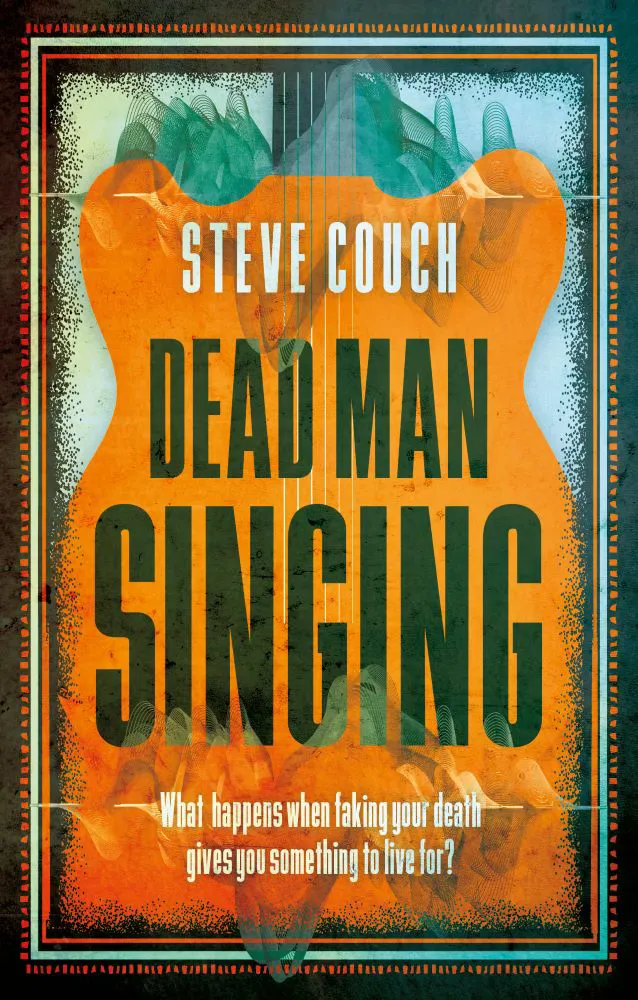
And then, on Friday 13th January 2023, I got an email. A publisher replied to my submission saying that they thought the book had commercial potential and they would like to publish it.
After 15 years of failing better, I finally got a yes. It sounds corny to say this, but the day I got that email it felt as if something was lifted from my shoulders. That nagging suspicion of having wasted my gift disappeared the day I got the email from Chloe at the Book Guild, and it has never returned.
After Dead Man Singing, I returned to House of Red Cards. Time and distance, plus what I’d learned writing Dead Man Singing, made me realise what was wrong with the earlier work. After extensive rewrites, House of Red Cards – now called Foul and Fair – made it into print.
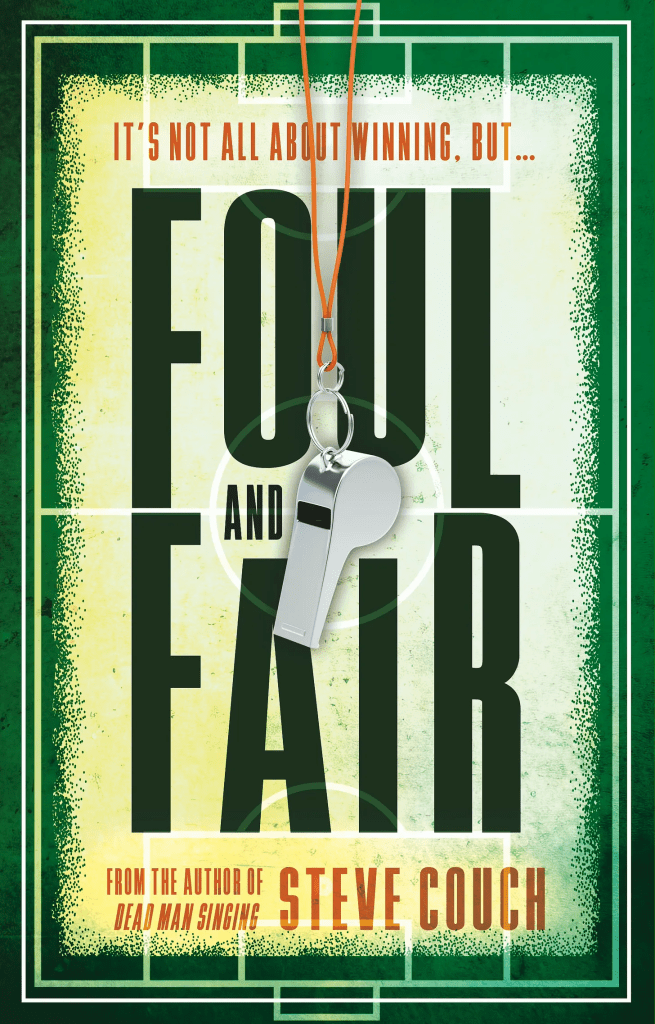
Both books have been well-received by readers, which has been an absolute joy. Although I’m still a firm believer in the writing being its own reward, it’s still a huge buzz when someone tells me that they’ve enjoyed something I’ve written.
And now there’s a third book on its way out into the world. Imogen Imagine (due to be published by the Book Guild in September 2026) is the story of a young woman whose life is derailed when her ex-boyfriend has a massive hit single with a song about their breakup. As proud as I am of the two earlier works, I genuinely think this is the best thing I’ve written yet, and I can’t wait to see how it goes down with my readers.
And that’s where the whole ‘masterminding a smash hit single’ comes in. While writing the book, I found myself including snippets of lyrics from the fictional song (also called ‘Imogen Imagine’) that causes my heroine so much trouble. Then I fleshed out those extracts into a fully-fledged song lyric. Once that was done, I ran them past a songwriter friend of mine, asking whether he thought they worked. Olly replied that it was hard to say until someone put a tune to them. Would I like him to try writing some music to accompany my words?
Reader, I bit his hand off.

And that brings us to where we are now. In advance of the book’s publication, we are looking to produce a professional recording of the song, giving it a shimmering pop production and making it sound the way my characters would know it. To that end, I’ve started a crowdfunder to raise the money to pay for studio time, musicians, production, mixing and mastering. I’m offering some great rewards for donors – you can see them for yourself at https://www.crowdfunder.co.uk/p/recording-the-songs-from-imogen-imagine, and we’re well on the way to reaching the final target. I’m grateful to Olly for steering me through the process, and excited at the prospect of potential readers being able to hear the song that drives the book’s narrative.
If you’d told me when I started writing for my sons that it would lead to recording a pop single, I wouldn’t have believed it. If you’d told me that one day I’d be a published author and speaking regularly at literary festivals… that I might have dared to believe, but I would have been shocked to hear that it took fifteen years of failing better to get there. That said, I wouldn’t swap my journey for a straighter, swifter one. Each of the steps along the way has taught me more about my craft and more about why I do this. What I’ve gained in that journey can’t be measured in book sales alone. Not bad for a mid-life crisis.
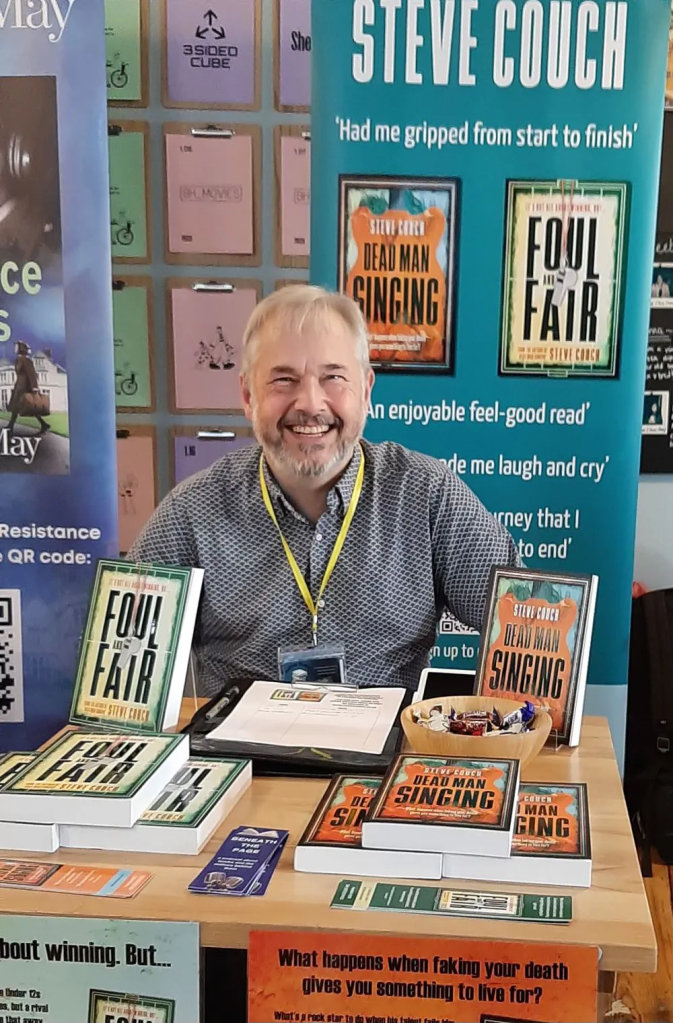
You can see Steve, along with Olly Hopper-Pay, perform a musically-enhanced reading from Dead Man Singing – and possibly Olly singing an acoustic version of the song ‘Imogen Imagine’ – at our Author Talk meeting at Café Riva, Bournemouth on Tuesday 31st March. Click here for tickets. https://events.authorevents.co.uk/events/author-talk-20260331/
For more information about Steve’s writing, see www.stevecouch.co.uk
As a special treat – Olly is now on YouTube performing Imogen Imagine if you would like to see it:
Imogen Imagine by Olly Hopper-Pay
 Author Events
Leave a comment