
By Janet Hancock
‘I’m going to be a writer one day,’ I used to think through my 20s and early 30s. I had grown up surrounded by books. Both parents read to me from an early age. My mother used to recall that when I was three I cried tears of frustration because ‘I shall never be able to read.’ At the grammar school, I had an inspirational history teacher. We were there, living the subject, marching, signing treaties, surviving. It was his-story (or her?). As a young adult, I devoured the novels of Catherine Gaskin, Ann Bridge, Catherine Gavin, featuring ordinary late 19th/early 20th century people in different parts of the world through war, revolution, social change, the big canvas; also Taylor Caldwell’s novels in 19th century America: captains of industry establishing dynasties. ‘I’m going to write like that,’ I would tell myself. But life got in the way.
A winter of unemployment following redundancy drove me to put pen to paper – I didn’t even have a typewriter. I enrolled with the London School of Journalism for a correspondence course on short stories. I learnt about characterisation, dialogue, viewpoint, useful lessons for a writer of long as well as short fiction. By the end of the course, I had returned to full-time work. Writing became fitted into the occasional weekend, nothing disciplined, with weeks, sometimes months, neither writing nor doing anything with what I’d written. The romances I’d produced for the course and sent to women’s magazines all came back.
I wrote a Mills and Boon romance, not that I’d read any, not my sort of book, but I had a story I wanted to tell, semi-autobiographical, set in the Austrian Tyrol. Surely a Mills and Boon would be easy for they were thin little books. Wrong. I had a lot to learn. My writing was becoming more disciplined, though. My husband used to play golf on Mondays and Fridays and those became my writing times. The rest of the week was composting, writing in my head, jotting things down. On the LSJ course I’d learnt to keep an ideas notebook. I joined the Romantic Novelists Association. I still yearned to write a historical novel of the sort I enjoyed reading, yet was searching for a big canvas.
I read about a young Englishwoman caught in the 1917 revolution in Baku, at that time in Russia. She went into the ideas notebook but kept jumping out, wouldn’t let me go. Who was she? How had she come to be in Baku? Where exactly was Baku? All the way down there? Near Persia? (present-day Iran). I love maps. I wanted to write about her. So I fictionalised her. I had found my big canvas. I loved the research, other fictional characters forming, reaching out to me. When I started the first draft, in longhand, I felt like a fledgling soaring. I typed it up, 800 pages, several storylines, multi-viewpoint, with no understanding of editing. The book was as long as it took to tell the story. The RNA New Writers’ Scheme taught me otherwise. I joined the Historical Novel Society and started reviewing for the Historical Novels Review, also a good lesson in editing and concise writing.
I joined a writers’ group, and another for critiquing each other’s work. In the local group, we occasionally set ourselves the task of producing a piece of writing incorporating six words chosen at random by the group. As a result I wrote ten short stories, and two inspired by pictures. My style was becoming more literary. I left the RNA, realising I was not a romantic novelist in the genre sense, although is not all fiction romantic in the wider interpretation? I still meet several past and present members for lunch a few times a year
I went to the Annual Writers’ Conference in its Southampton days and when it moved to Winchester, loving the atmosphere, meeting other writers, absorbing all I could. I learnt to write a synopsis, a query letter. The director, Barbara Large, was a constant presence, competition entries and adjudications returned with her hand-written note of encouragement. A couple of months after my husband died, Barbara spent time with me and we kick-started another draft of the Russian book.
A Winchester tutor suggested I enter competitions. I’d already entered some at Winchester, and started scouring websites and columns of magazines such as Mslexia. All but three of the short stories were placed or shortlisted, one winning first prize, some published in anthologies or online. A draft of the Russian book won the First Three Pages of a Novel Competition at Winchester, was on the Mslexia novel longlist and the Yeovil Prize shortlist. These encouragements drove me on, determined to pursue publication.
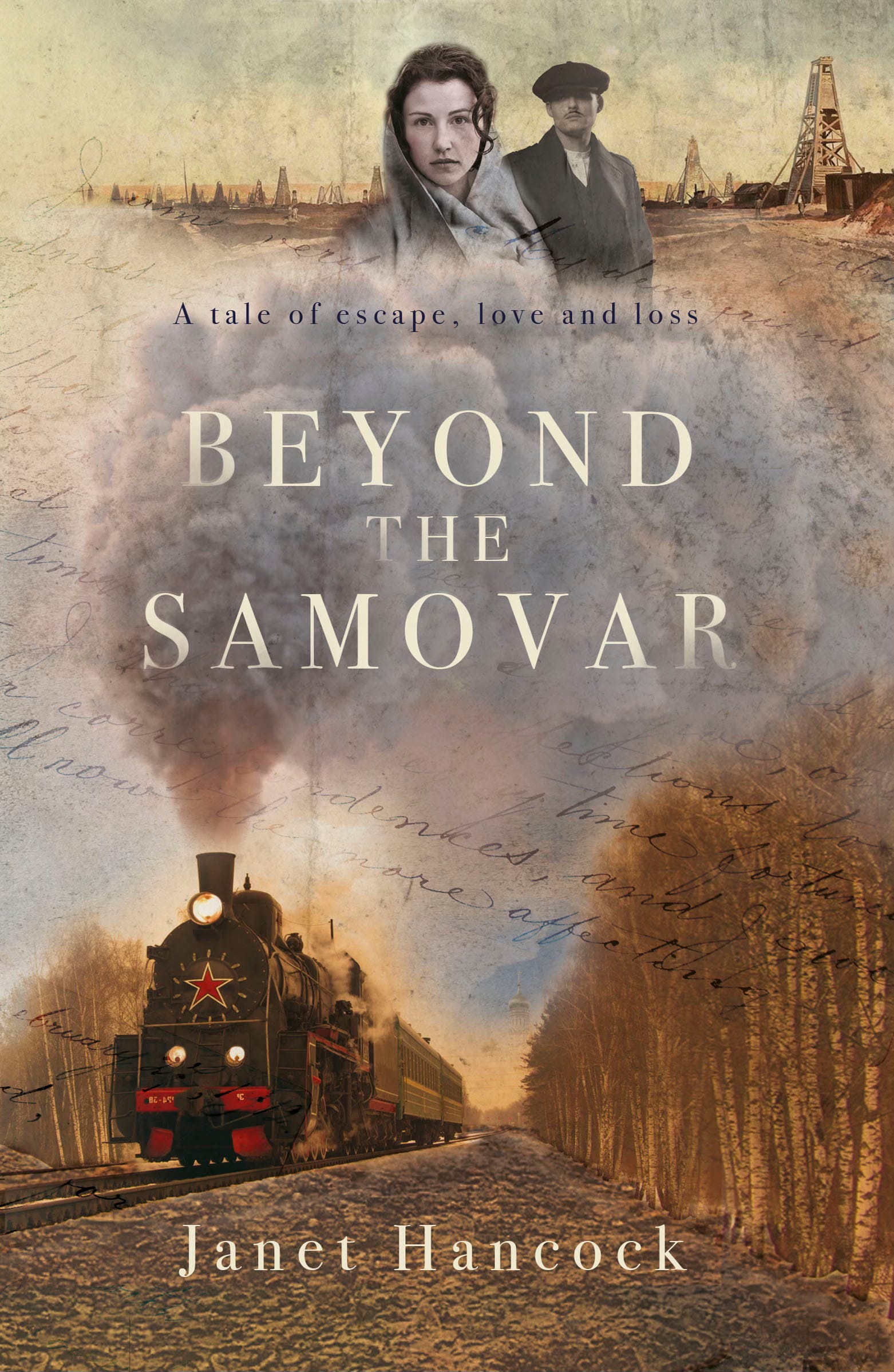
The Russian book went through six drafts, three changes of title, 800 pages reduced to 330. There were gaps – sometimes years – between drafts, while I worked on short fiction, and researched and drafted two further novels. I would return to the book with fresh eyes and insight and cut away the dead wood, although nothing is ever wasted and some came to life in another book. I joined a group which meets for a working weekend every January to concentrate on a chapter, and received invaluable feedback on paragraph structure, characterisation, dialogue. The Russian book was published as Beyond the Samovar by independent publishers The Conrad Press in 2019.
A few months previously, I had been invited to join the Tears in the Fence poetry workshop –
– which takes place most months, and with an annual festival. Writing poetry has enriched my use of language and developed my writing, honing the need to make every word count. I have had poetry published in several print and online anthologies and literary journals, and was thrilled to win 1st prize at the 2025 Sturminster Newton Literary Festival.
I enjoy reading at festivals and open mics – Winchester, Blandford, South Hams – and meeting readers and writers. I have become a regular exhibitor at the annual Frome Small Publishers Fair and the twice-yearly Oxford Independent Book Fair. The annual Bournemouth Writing Festival and its regular networking evenings have opened new doors, including Author Events. A podcast with festival director, Dominic Wong, was released on YouTube in the summer of 2024, after the publication of my 2nd novel The West in Her Eyes. A 2nd podcast was released in June 2025 in the series Beneath the Page, curated by Bournemouth author Steve Couch and Sophie Beal, director of Cadence Publishing.
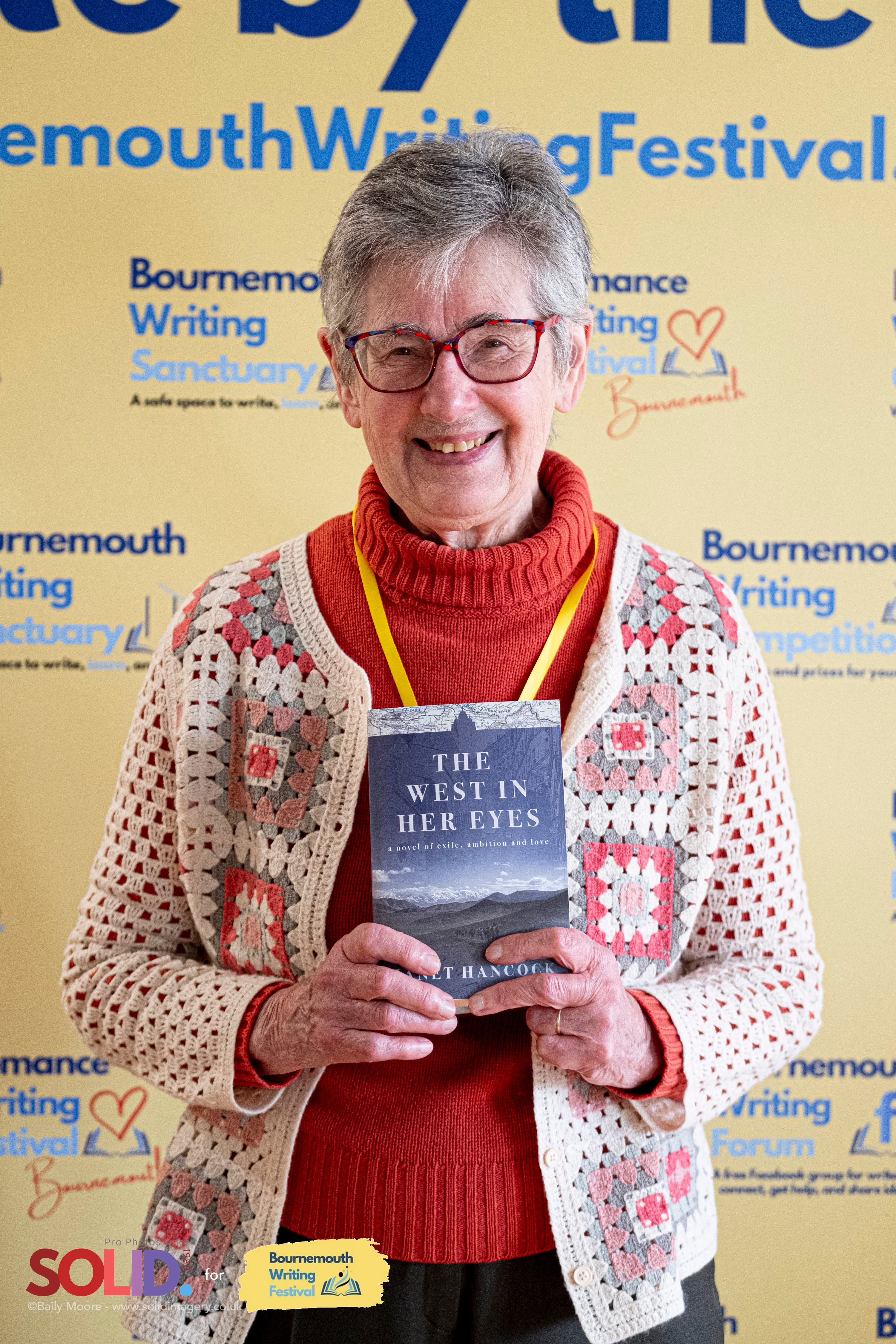
The West in Her Eyes is a tale of exile, ambition and love in a fictional Russian family during the decade after the 1917 revolution. In spite of the Russian connection, it stands separately from Beyond the Samovar. The publisher is Resolute Books, an independent collective of writers, editors, and graphic designers – www.resolutebooks.co.uk. We work to our strengths to support each other and bring high quality fiction, memoir and poetry to the reading public. I am working on a 3rd novel, with publication in late 26/early27 by Resolute Books.
Your writing journey may well have been shorter than this. Perhaps you have yet to start. Wherever you are along the road, hang on in there, keep knocking on doors. Go for it.
Thanks for reading The Write Path! Subscribe for free to receive new posts and support our work.
https://www.resolutebooks.co.uk/books/p/beyond-the-samovar
https://www.resolutebooks.co.uk/books/p/the-west-in-her-eyes-janet-hancock
 Author Events
Leave a comment