
‘You know that he can’t write. I know that he can’t write. He thinks he can, and that’s good enough for me.’
It seems to me that Eric Morecambe’s observation on Ernie Wise’s ‘play what he wrote’ remains pertinent for many authors. The burgeoning self-publishing market is a welcome home to many authors who ‘think they can’ – as, indeed, many can. Although, let’s be honest, there are some who clearly ‘can’t’…
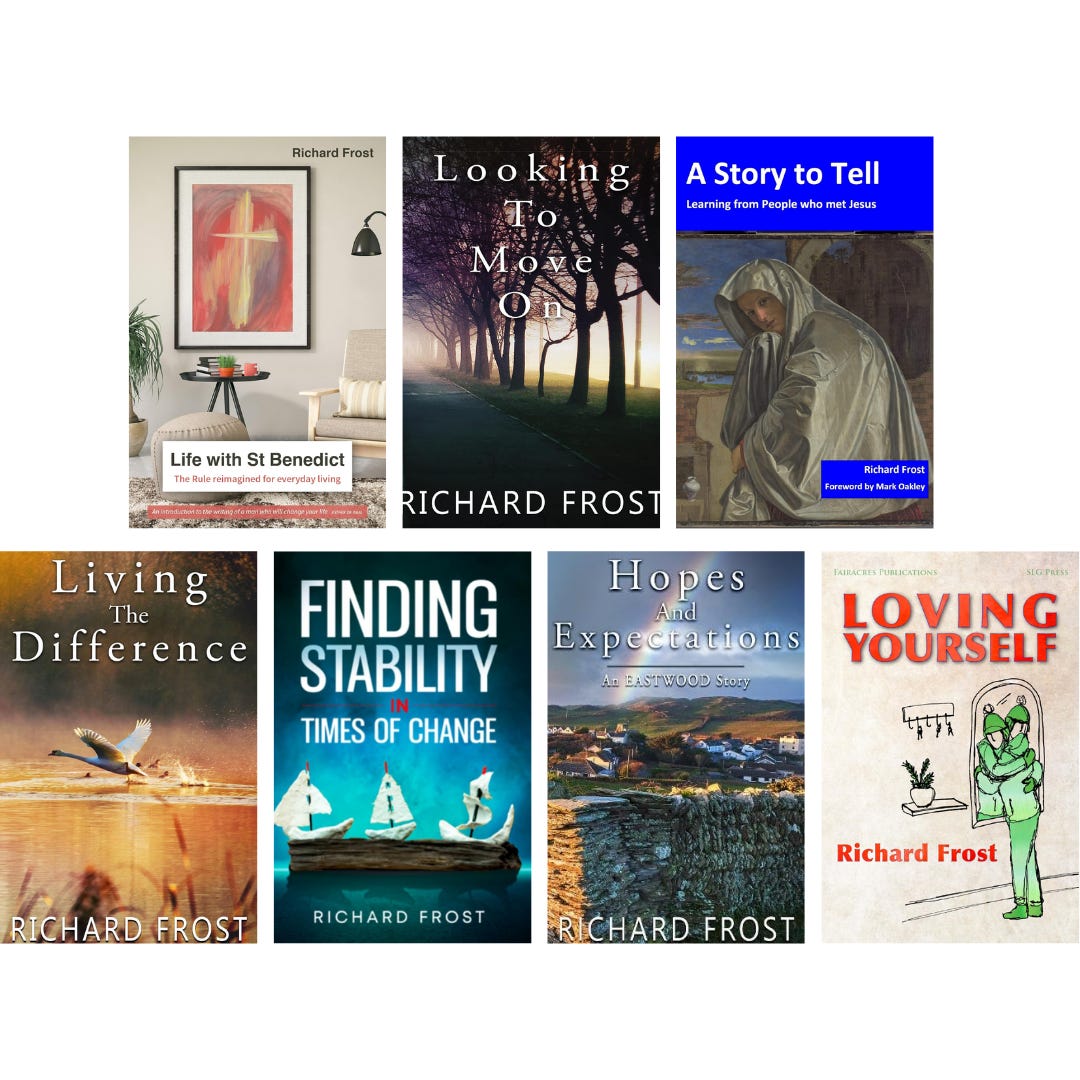
I’ve been very fortunate that six of my seven books have been published by traditional publishing houses. There is a lot of affirmation in others saying ‘I can write’, but nonetheless when most of the marketing is down to me and sales and reviews are hard to come by, I can doubt too.
I have always enjoyed how words are crafted and moulded. How they become something that inspires and engages readers and listeners – and makes you think ‘yes, they can write’. It was probably Spike Milligan who first showed me how to have fun with words, how they can be played with. Others like Alan Bennett and Peter Tinniswood have that same keen sense of quirky observation. Then there are the non-fiction writers too – those whose words are not beyond all understanding.
Over the years, I’ve written numerous articles, newspaper interviews, press releases, book reviews, talks and even put words in to the mouths and pens of others. In more recent years, there’s been books too. Four connected to the Christian faith: trying to enable people to live out what they believe. Making faith real in a world that has become disillusioned with the church and often misunderstanding the nature of God.
Writing fiction, though, was a ‘Lockdown surprise’. From nowhere it seemed, some words came in describing a stranger. Where did that come from, I wondered. The stranger sat in my head for a couple of weeks until I wrote him down. A couple of short stories followed and a piece of flash fiction found its way in to an anthology. Those short stories became companions to the stranger and grew in to (what I learnt was to be called) a novella. The characters and their actions took on a life of their own and by the end of Book 1, Looking to Move On, I wished I could meet them.
But of course those lives were not completely their own. My professional career lasted some nearly 40 years helping people to find or remain in employment. I specialised in helping people with disabilities and health problems, particularly those experiencing mental ill health. What has now become the Eastwood Story series of three contemporary fiction novellas explore different aspects of everyday life for the central and other characters. They draw a lot on my professional and personal experience of what I have seen and encountered in other people and how we deal with what life brings, as well as lessons from my own life. They are stories of love and loss, laughter and tears, conflict and resolution. Stories of hope over adversity – all with happy endings.
For me, writing in the two genres is quite different. With the faith books, I plan out chapter headings, a summary of what will be in each section etc. With the novellas, which are not overtly religious but are clean, it’s more spontaneous, letting the story take on a life of its own to a degree.
I write for readers – not for other authors. I haven’t got a clue what POV means or a character arc or other such ‘creative writing’ terminology. Whether it’s a book, an article or even a sermon, my writing style has similar markers in whatever genre – some like it, others don’t and that’s fine. Weaving threads throughout the whole piece, reflecting back and looking forward, repeating key phrases, crafting and moulding the words. A bit straight. A bit quirky. Dry wit and touching emotion. Encouraging and challenging. Above all, whether reading a novella or one of the faith books, I hope readers will find words they can relate their own life to. Hopefully they’ll enjoy it as well!
‘Richard’s style of writing reminded me of John Steinbeck. Concise, brief, meaningful.’
‘You’re very descriptive, Richard – the way you write. I can see it all.’
‘Perceptive and wise – a valuable guide on life’s journey.’
I learnt fairly quickly that people are not going to rush out and buy my books because they like the title or because it’s me. It’s the comments not the numbers that matter. When people say they enjoyed it or found it helpful. Those are the things which help me to know that yes, I can write.
And that’s good enough for me.

Richard Frost MBE is a former mental health and work specialist and a lay minister living in Devon.
Details of my books can be found at: https://richardfrostauthor.com/
I write a blog and present a podcast at: http://workrestpray.com/
You’ll find me on social media too – just take a look at the websites for the links.
Category:RichardFrostNews
 Author Events
Leave a comment